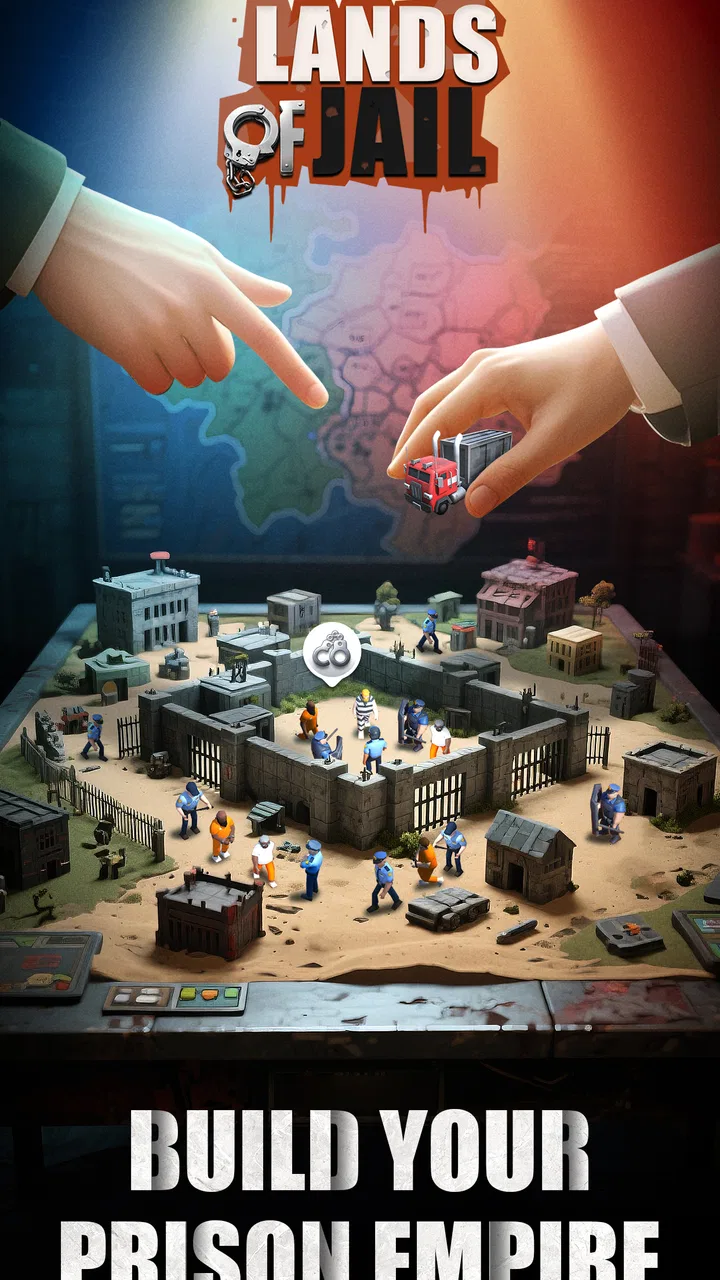
Lands of Jail
- 4.6
- Rating
- 10.00M
- Installs
- Free
- Price

 Analysis by App-foxy
I spent time with Lands of Jail as a strategy game built around managing a prison where order is never guaranteed. Its central appeal is easy to understand: you are not simply placing buildings or collecting rewards, but trying to keep a difficult environment under control while making decisions that affect how the whole operation feels. That gives it a more tense personality than a relaxed decoration-focused management game.
The game is free to download, with optional purchases ranging from $0.99 to $99.99 per item. It is developed by SINGAPORE JUST GAME TECHNOLOGY PTE. LTD., carries a Teen content rating, and runs on Android 7.0 or later. The current version is 1.0.56, and the game has already passed over five million installs. Those details make it accessible to a wide range of Android users, although accessibility and enjoyable performance are not exactly the same thing.
How the prison-management loop feels in everyday play
My first impression was that the game works best when I treat it as a series of connected decisions rather than a quick tap-through experience. A prison is a naturally demanding setting for strategy: space, control, people and resources all compete for attention. Even when a session begins calmly, I find myself thinking about what might become a problem later if I spend too freely or expand before the operation is ready.
You May Also Like

 Blood Strike: 2.5 Anniversary
Blood Strike’s Loadouts Turn Every Drop Into a Tactical Gamble
A close look at Blood Strike’s custom loadouts: how fast access to signature weapons reshapes its battle royale rhythm, rewards preparation, and narrows the gap between fights.

 Pandora - Music & Podcasts
Pandora’s Music Is Easy to Start, but Harder to Recover
Pandora’s strength is its low-effort path from a seed to a station. Its weak spot is how much confidence it asks you to place in connection, setup, and quiet recovery.

 8 Ball Pool
 Is Built on Rivalries, Rematches, and Routine
A close look at the rivalries, rematches, shared routines, and unanswered safety questions that turn a quick pool match into a persistent mobile community.

 Samsung Music
’s Quiet Strength Is Playing What You Already Own
Its reach comes less from spectacle than from dependable access to a personal library. That simplicity is both the app’s strongest retention engine and its ceiling.

 AccuWeather: Weather Radar
AccuWeather Review: A Quick, Clear Forecast for Everyday Decisions
For everyday plans, the best forecast is the one you can understand quickly. AccuWeather makes rain timing, radar, and local conditions easy to act on, with a few trade-offs.

 Hill Climb Racing
Why Hill Climb Racing Still Turns Crashes Into One More Run
A tiny car, a bumpy hill and one more upgrade: Hill Climb Racing keeps resurfacing because its simple chaos makes every near-miss feel personal.
More From Our News Desk



That structure gives the game a useful rhythm for short and medium sessions. I can check the current situation, make a few meaningful choices, and leave with the feeling that I have changed the direction of the prison. It is not the sort of game I would recommend only for players who want constant action. Its satisfaction comes from planning, watching consequences develop and deciding which issue deserves attention first.
The store rating sits at a 4.6 average from roughly 169 thousand ratings, while the game has about 1.9 thousand written reviews. I would not use those figures as a promise that every player will enjoy it, but they do suggest that the combination of prison management and strategy has found a substantial audience. In my experience, the strongest reason to stay is the sense that small choices can create larger problems if I ignore the wrong detail.
Speed expectations before you start
The game feels most comfortable when I approach it at a deliberate pace. Strategy titles often tempt players to rush through early actions, but that can make the interface feel busier than it needs to be. I get more from Lands of Jail when I pause long enough to understand what each decision is trying to solve instead of tapping through every available option immediately.
For a casual player, that slower rhythm is an advantage. It makes the game suitable for checking during a break, after work or while relaxing at home. I do not need to commit to a long uninterrupted sitting to make progress in the way I want. The prison-management theme also gives those short sessions a clear purpose: I am returning to inspect a living problem, not merely collecting disconnected rewards.
For players who expect instant action, the same design may feel less exciting. This is not the right choice if your ideal mobile game is built around rapid battles, constant movement or a match that is completely resolved in a few minutes. The strategic appeal depends on accepting that the most important moment may be deciding what not to do yet.
What happens during heavier play
The busiest moments come when several responsibilities demand attention at once. That is where I notice the difference between simply opening the game and actually managing it. A quick visit can feel light, but a longer session encourages more checking, more planning and more movement through the game’s management flow. The mental workload increases before the physical workload does.
My practical tip is to begin a longer session with a priority check. I first identify the problem that could cause the most trouble, then deal with secondary improvements. This avoids the common management-game mistake of spending time on attractive upgrades while a more urgent weakness remains untouched. In Lands of Jail, that habit makes the experience feel more controlled and reduces the sense of being pulled in several directions.
Another useful approach is to avoid treating every available improvement as equally valuable. A prison-management game rewards attention to bottlenecks. If one part of the operation is limiting everything else, improving unrelated areas can produce very little immediate benefit. I find that the game becomes more satisfying when I ask, “What is currently holding the whole prison back?” rather than simply choosing the most visible option.
This is also where resource pressure can affect enjoyment. The game is free, but optional purchases are present, and the listed price range reaches from $0.99 to $99.99 per item. I recommend deciding early whether you want a completely free experience or whether you are comfortable paying for convenience. That boundary matters because strategy games are less enjoyable when every decision becomes a comparison between patience and spending.
A realistic daily scenario
Imagine opening the game during a lunch break. I would not try to redesign the entire prison in that moment. Instead, I would review the current situation, handle the most urgent management task and make one planned improvement. That gives the session a defined endpoint and avoids turning a short break into hurried, unfocused play.
Later, at home, I could return for a longer session and examine the consequences of that earlier choice. Did the improvement solve the real bottleneck, or did it only make one part look better? This two-step routine suits the game because it turns brief visits into preparation for more thoughtful sessions. It also helps players who dislike feeling that they must remain online constantly.
If I were recommending it to a friend, I would describe it as a game for someone who enjoys checking systems, spotting weak points and making measured changes. I would not recommend it to someone who wants a purely relaxing idle experience, because the prison theme and management pressure give it a more demanding mood.
Stability and reliability in normal use
The game’s broad Android compatibility is useful. With Android 7.0 as the minimum operating system, it is not limited to only recent phones. That does not mean every older device will provide the same experience, but it does lower the entry barrier for players who have not upgraded recently.
In ordinary use, reliability is not only about whether the game opens. I also judge whether I can understand where I left off, whether a short visit feels worthwhile and whether the game remains manageable when I return after a pause. Lands of Jail benefits from having a clear strategic identity: I know I am returning to a prison that needs decisions, not searching through a collection of unrelated activities.
Recovery is especially important in a management game. If I leave after making a poor choice, I want the next session to feel like an opportunity to adapt rather than a reason to abandon the entire run. The prison setting supports that mindset because setbacks fit the theme. A problem is not automatically a failure; it can become information about what needs more attention.
Still, players who dislike gradual recovery should think carefully before installing. The appeal depends on accepting that not every mistake can be corrected instantly. I prefer games that let me learn from a weak plan, but someone looking for a clean win every session may find the pressure tiring.
Device constraints and resource awareness
The minimum operating-system requirement makes the game approachable, but the device itself still matters. A phone that technically meets the Android requirement may not feel equally comfortable during longer sessions. Screen size, available storage, battery condition and general age can all influence how pleasant a management game feels, even when the operating system is supported.
I would be cautious about judging performance from the first few minutes alone. A brief launch tells me whether the game is immediately usable, but a longer management session is a better test of comfort. If the device becomes warm, loses battery quickly or begins to feel crowded when several tasks are competing for attention, I would shorten sessions and avoid leaving the game open unnecessarily.
Players using older hardware should also keep expectations practical. The game has more going on mentally than a simple puzzle, and management interfaces can become demanding when I am checking several parts of the prison. A newer or better-maintained phone is likely to provide a more comfortable experience, while a basic older device may be better suited to shorter visits.
My advice is to install it with enough free space for normal phone operation and to test it during the kind of session you actually expect to play. Someone who only checks in briefly may be perfectly satisfied on modest hardware. Someone planning long daily sessions should pay closer attention to heat, battery use and how quickly the interface remains responsive.
Where it stands beside other strategy games
Compared with traditional city builders, Lands of Jail has a more focused identity. A city builder often encourages expansion, beautification and broad economic planning. Here, the prison context makes control and disruption feel more central. I am not simply trying to create an attractive settlement; I am trying to keep a difficult institution functioning.
Compared with turn-based strategy games, it is less about carefully arranging a single battle and more about maintaining a wider operation. That makes it a better fit for players who enjoy ongoing management rather than a sequence of isolated tactical encounters. The trade-off is that it may feel less precise to someone who wants every decision to happen inside a clearly bounded match.
It also differs from lightweight idle games. Idle games are often designed to minimize attention, while this title asks me to think about priorities. I can play in short sessions, but I do not get the same value from switching off completely. If your preferred alternative is a game that progresses almost entirely without supervision, this is probably not the better option.
The prison theme is the main reason to choose it over a generic management game. It gives the decisions a stronger emotional frame and makes disorder feel more meaningful. The downside is that the setting will not appeal to everyone. Players who prefer cheerful farming, construction or fantasy worlds may find the atmosphere too tense even if they enjoy strategy mechanics.
Who will get the most from it
I think the best audience is made up of mobile players who enjoy gradual improvement, resource choices and the challenge of keeping several concerns in balance. It works particularly well for someone who likes returning to an evolving situation and asking what changed since the last visit.
It is also a good candidate for players who want a free starting point before deciding whether a game deserves more time. The free entry makes experimentation easy, while the Teen rating signals that the prison theme is aimed at an older audience than a child-focused management game. Parents choosing games for younger children should take that rating seriously rather than assuming that a strategy label means universally suitable content.
I would tell competitive players to approach it with patience. If your enjoyment comes from immediate victories, fast reaction tests or short rounds with a clear winner, another strategy game may suit you better. Lands of Jail is more appealing when the process of keeping the operation under control is itself the reward.
Small habits that improve the experience
My first habit is to make one goal for each visit. That goal might be stabilizing a weak area, preparing for a larger change or simply checking whether a previous decision worked. It prevents the game from becoming a long chain of unexamined taps and makes progress easier to recognize.
My second habit is to separate urgent decisions from attractive decisions. An improvement can look valuable because it is easy to understand, but that does not mean it solves the prison’s biggest problem. I get better results when I identify the constraint first and spend only after I know why it matters.
My third habit is to keep purchases outside the decision-making loop until I know how I feel about the free experience. Since individual in-app purchases can extend as high as $99.99, I would never make a purchase simply because a session feels slow or frustrating. I would first close the game, return later and decide whether the purchase supports a long-term plan rather than an impulse.
A fourth habit is to test the game under realistic conditions. If I intend to play during commutes or short breaks, I should judge it through short visits. If I expect long evening sessions, I should test comfort, battery behavior and concentration over a longer period. That gives a more honest answer than relying on a quick launch.
My performance verdict
Lands of Jail is strongest when I treat it as a thoughtful prison-management strategy game rather than a fast entertainment app. Its speed expectations are moderate, its busiest moments come from overlapping decisions, and its device requirements are broad enough to invite experimentation on many Android phones. The current version, 1.0.56, gives players a clear version point to look for when installing or checking whether they are up to date.
The game’s main limitation is not a single obstacle but the combination of management pressure, gradual pacing and optional spending. Players who want immediate action may lose interest, while players on older devices should test longer sessions instead of assuming that the minimum operating-system requirement guarantees ideal performance. The Teen rating also makes it a less obvious choice for children.
For me, the strongest recommendation is simple: install it if you enjoy finding the weak link in a complicated operation and improving it step by step. Skip it if you want a completely hands-off idle game, a bright casual builder or a strategy title built around rapid matches. The best reason to play is the feeling of restoring control after the prison starts to slip out of balance.
Overall, I see Lands of Jail as a solid free strategy option for Android players who enjoy a distinctive setting and do not mind making patient decisions. I would begin without spending, use short sessions to learn the rhythm, and only consider optional purchases after deciding that the prison-management loop genuinely fits my routine. That approach lets the game prove its value through play rather than through promises.
FAQs for Lands of Jail
01What is the main objective of Lands of Jail?
Lands of Jail is a strategy-based mobile game where players assume the role of a prison warden. Your main objective is to manage and expand your prison by maintaining order, upgrading facilities, and ensuring the well-being of both inmates and staff. Success depends on strategic planning and resource management.
02Is Lands of Jail free to play?
Yes, Lands of Jail is free to download and play. However, like many mobile games, it includes optional in-app purchases. These purchases can enhance gameplay by providing additional resources or unlocking exclusive content, but they are not necessary to enjoy the full experience of the game.
03What are the system requirements for Lands of Jail?
Lands of Jail requires Android 5.0 or iOS 10.0 and above to ensure optimal performance. The game is designed to run smoothly on most modern smartphones and tablets. It's recommended to have at least 1GB of free storage and a stable internet connection to download updates and access online features.
04Does Lands of Jail require an internet connection?
While Lands of Jail can be played offline, certain features such as multiplayer modes and leaderboards require an internet connection. Playing online also ensures you receive the latest content updates and participate in special in-game events and challenges.
05How does Lands of Jail handle data privacy?
Lands of Jail prioritizes user privacy and complies with data protection regulations. The game collects minimal personal information, primarily for account creation and gameplay improvement purposes. Players can review the privacy policy within the app settings to understand how their data is used and managed.
Pros
- Engaging storyline keeps players hooked.
- Diverse characters with unique abilities.
- Smooth graphics enhance gameplay experience.
- Regular updates with new content.
- Multiplayer mode adds competitive fun.
Cons
- Some levels can feel repetitive.
- In-app purchases can be quite pricey.
- Occasional bugs affect performance.
- Requires constant internet connection.
- Ads can interrupt gameplay frequently.

Lands of Jail
Gallery